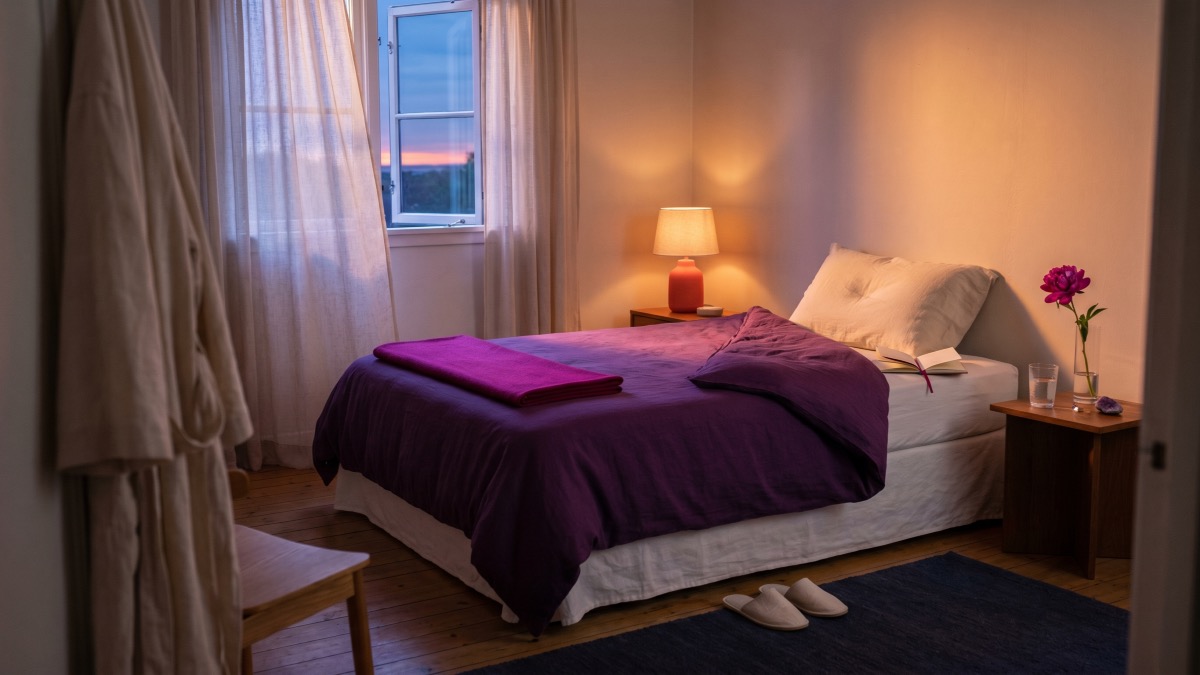
The Ideal Bedroom Temperature for Sleep (It's 65°F / 18°C Here's Why)
The Ideal Bedroom Temperature for Sleep: The Best Bedroom Temperature for Sleep Is 65°F / 18°C — Here’s Why The best bedroom temperature for sleep is about 65°F / 18°C, with an ideal range of 64–67°F / 18–19°C for most adults. That number is not random. Your body is biologically designed to cool do
The Ideal Bedroom Temperature for Sleep: The Best Bedroom Temperature for Sleep Is 65°F / 18°C - Here’s Why
The best bedroom temperature for sleep is about 65°F / 18°C, with an ideal range of 64–67°F / 18–19°C for most adults. That number is not random. Your body is biologically designed to cool down before sleep, and a room that is too warm can interfere with that natural temperature drop, making it harder to fall asleep, stay asleep, and reach deep restorative sleep.
If you have ever tossed off the covers at 3 a.m., woken up sweaty, argued with a partner over the thermostat, or wondered why you sleep better in a cool hotel room, temperature may be one of the missing pieces in your sleep routine. Light, noise, stress, and screen time matter , but the room temperature for sleep can quietly determine whether your nervous system settles or stays alert.
This matters right now because many people are trying to improve sleep without medication, complicated tracking, or expensive gadgets. The good news: bedroom temperature is one of the most practical sleep levers you can adjust tonight.
In this guide, you’ll learn:
- Why your core body temperature must drop by about 1°C before sleep
- The exact ideal sleeping temperature range for adults, babies, seniors, and hot sleepers
- Why warm rooms increase wake-ups and reduce deep sleep
- How the lukewarm shower trick helps you fall asleep faster
- Why wearing socks can help even if you are a “warm sleeper”
- How to set your thermostat, bedding, pajamas, and airflow for better sleep
- What to do if you share a bed with someone who prefers a different temperature
Quick navigation:
- The science of cooling down before sleep
- The best bedroom temperature for sleep by age group
- Thermostat, bedding, layering, and seasonal adjustments
- Special considerations for couples, babies, seniors, menopause, and hot sleepers
- Common mistakes and a practical bedtime temperature checklist
This article is part of Astrara’s approach to practical personal transformation: small daily changes that compound over time. If you’re building a calmer evening routine, you can explore the Astrara personal development app or read more on the Astrara blog.
The Science: Why Your Body Needs to Cool Down Before Sleep
Temperature is not just a comfort preference. It is one of the core biological signals that tells your brain when it is time to sleep. As evening approaches, your circadian rhythm the internal 24-hour clock that regulates sleep, hormones, alertness, digestion, and body temperature begins preparing you for rest. One of the most important changes is a gradual drop in core body temperature.
For sleep onset to happen smoothly, your core body temperature typically needs to fall by approximately 1°C / 1.8°F. This cooling process is closely linked to melatonin release, reduced alertness, and the shift from active daytime physiology into nighttime recovery mode.
Core Temperature vs. Skin Temperature
One of the most misunderstood points about sleep temperature is the difference between core body temperature and skin temperature. Your core temperature refers to the temperature of your internal organs and brain. Skin temperature refers to the warmth of your hands, feet, and body surface.
To fall asleep, your body does something clever: it moves heat from the core toward the skin, especially the hands and feet. Blood vessels near the surface widen a process called vasodilation allowing heat to escape into the surrounding environment.
That is why a cool bedroom helps. When the air around you is cooler than your body, heat can leave more efficiently. But if the room is too warm, your body has a harder time releasing heat. Instead of drifting into sleep, you may feel restless, sticky, or oddly alert.
Why Warm Rooms Disrupt Sleep Architecture
Sleep is not one uniform state. It moves through stages: light sleep, deep sleep, and REM sleep. Deep sleep is especially important for physical restoration, immune regulation, tissue repair, and growth hormone release. REM sleep supports emotional processing, memory, and creativity.
A bedroom that is too warm can interfere with both. Research on sleep environments consistently shows that heat exposure can:
- Increase nighttime awakenings
- Reduce slow-wave deep sleep
- Fragment REM sleep
- Increase sweating and discomfort
- Make it harder to fall back asleep after waking
Real-world example: imagine two identical nights. On one night, your bedroom is 65°F / 18°C, your bedding is breathable, and your feet are warm enough to promote circulation. On the other, your room is 73°F / 23°C with a heavy duvet. Even if you fall asleep at the same time, the warmer room may trigger more micro-awakenings , short wake-ups you may not fully remember but that leave you feeling less restored.
Why Temperature Matters More Than Many People Think
People often blame poor sleep on stress, caffeine, or screens and those matter. But temperature can be the hidden reason a good sleep routine still fails. If your body cannot cool efficiently, relaxation techniques may feel less effective because your physiology is working against you.
Actionable tips for tonight:
- Start by setting your bedroom to 65°F / 18°C if possible.
- If that feels too cold, try 67°F / 19°C and use lighter bedding.
- Avoid heavy blankets that trap heat around your torso.
- Warm your feet without overheating your whole body.
- Notice whether you wake sweaty, chilled, or comfortable around 3–4 a.m.
Once you understand that sleep depends on heat loss, the ideal temperature range starts to make sense.
The Best Bedroom Temperature for Sleep: The Exact Range and Why It Is Not One Number
The best bedroom temperature for sleep for most adults is not a single magical number but a narrow range: 64–67°F / 18–19°C. The most commonly recommended target is 65°F / 18°C. This range supports the body’s natural cooling process while still being comfortable enough to avoid cold-related awakenings.
Featured snippet answer: The best bedroom temperature for sleep is 65°F / 18°C for most adults, with an ideal range of 64–67°F / 18–19°C.
So if you are asking, “what temperature should bedroom be for sleep?” the simplest answer is: cool, but not cold. Aim for 65°F / 18°C, then adjust based on your body, bedding, age, and climate.
Why 65°F / 18°C Works for Most Adults
A temperature around 65°F / 18°C creates a helpful contrast between your warm body and the surrounding air. That contrast makes it easier for heat to leave your body, especially when paired with breathable bedding and proper airflow.
Importantly, 65°F / 18°C is not about making you feel cold. If you are shivering, tense, or waking up chilled, your sleep environment is not optimized. The goal is to keep your core cool while your body feels comfortable and safe enough to relax.
Temperature Recommendation Table by Age Group
Different age groups have different needs. Babies, toddlers, and older adults often require slightly warmer rooms than healthy younger adults. Use the table below as a practical starting point.
Age Group / Sleeper Type Recommended Bedroom Temperature Why It Helps
| Most adults | 64–67°F / 18–19°C | Supports natural core temperature drop and deep sleep
| Hot sleepers | 62–66°F / 17–19°C | Allows extra heat release and reduces sweating
| Cold sleepers | 66–68°F / 19–20°C | Prevents cold-related tension while staying sleep-friendly
| Babies and toddlers | 68–72°F / 20–22°C | Young children regulate temperature less efficiently
| Older adults | 66–68°F / 19–20°C | May need slightly more warmth due to circulation and metabolism changes
| Menopause / night sweats | 60–67°F / 16–19°C | Cooler air and breathable layers help manage heat surges
Why “Comfortable” Is Not Always Sleep-Optimal
Many people set their bedroom temperature based on how it feels while awake. But what feels cozy at 9 p.m. may become too warm at 2 a.m., especially under blankets. Your body continues to regulate heat throughout the night, and bedding can trap warmth long after you fall asleep.
This is why people often say, “I fell asleep fine, but I woke up hot.” The thermostat may not be the only issue. Your duvet, mattress, pajamas, partner’s body heat, and room airflow all contribute to your actual sleep temperature.
How to Find Your Personal Ideal Sleeping Temperature
Start with 65°F / 18°C for three nights. Keep everything else as consistent as possible: bedtime, bedding, pajamas, and wake time. Then evaluate:
- Did you fall asleep faster?
- Did you wake less often?
- Did you wake sweaty, cold, or neutral?
- Was your sleep deeper or more refreshing?
If you wake cold, raise the room temperature by 1–2°F / 0.5–1°C or add a breathable layer. If you wake hot, lower the thermostat slightly or reduce bedding before changing the room temperature dramatically.
Next, let’s look at one of the most effective and misunderstood temperature tricks: the warm shower before bed.
The Lukewarm Shower Trick: Why Warm Water Can Help You Cool Down
At first, it sounds contradictory: if cooling down helps sleep, why would a warm shower before bed make you sleepy? The answer is the lukewarm shower paradox. A warm shower or bath taken 60–90 minutes before bedtime can actually help your body release heat faster.
The key is timing and temperature. The goal is not to heat yourself right before bed. The goal is to trigger circulation changes that help your body cool afterward.
How the Lukewarm Shower Paradox Works
When warm water touches your skin, blood vessels near the surface widen. This vasodilation brings heat from the core toward the skin. After you step out of the shower, that heat can dissipate into the cooler surrounding air. As your body releases heat, your core temperature drops, which helps signal sleep readiness.
In simple terms:
- Warm water increases skin blood flow.
- Heat moves from your core to your skin.
- You step into cooler air.
- Your body releases heat more efficiently.
- Your core temperature drops.
- Sleep onset becomes easier.
This is one reason evening bathing rituals have existed across cultures for centuries. They do not just feel relaxing; they support the body’s sleep biology.
Best Timing: 60–90 Minutes Before Bed
Timing matters. If you take a hot shower immediately before getting under heavy blankets, you may feel overheated. But if you shower about an hour to an hour and a half before bed, your body has time to complete the cooling phase.
For example, if your target bedtime is 10:30 p.m., take your shower around 9:00–9:30 p.m. Then keep your bedroom cool at around 65°F / 18°C and avoid bundling up too heavily afterward.
Warm, Not Scalding
A sleep-supportive shower should be warm or lukewarm not aggressively hot. Very hot water can raise body temperature too much, dry the skin, increase heart rate, or make you feel flushed. Aim for pleasantly warm water that relaxes your muscles without leaving you overheated.
Actionable tips:
- Take a warm shower or bath 60–90 minutes before bed.
- Keep the water warm, not steaming hot.
- After bathing, wear breathable pajamas.
- Avoid getting into bed while still overheated.
- Pair the shower with dim lights and a calming routine.
Real-World Example: The “Too Wired to Sleep” Evening
Suppose you finish work late, feel mentally stimulated, and cannot switch off. A warm shower at 9:15 p.m., followed by dim lighting, journaling, and a 65°F / 18°C bedroom can create a sequence of cues: warmth, vasodilation, cooling, calm, darkness, and sleep. This is more powerful than relying on willpower to “force” yourself to relax.
If you want to build this into a broader transformation routine, Astrara’s 21-day format is designed around small daily practices like journaling, meditation, breathwork, and sleep-supportive rituals. You can start from the Astrara homepage or explore related reflections on the blog.
How to Set Your Bedroom Temperature for Sleep: Thermostat, Bedding, Layers, and Airflow
Setting the thermostat to 65°F / 18°C is a strong start, but it is not the whole sleep environment. Your actual sleeping temperature is created by the combination of room air, bedding, mattress materials, sleepwear, humidity, airflow, and body heat. That is why two bedrooms set to the same thermostat temperature can feel completely different.
To create the best bedroom temperature for sleep, think in layers: the room, the bed, the body, and the air.
Start with the Thermostat
If you have climate control, set your bedroom between 64–67°F / 18–19°C. If you are not sure where to begin, choose 65°F / 18°C for three nights and observe how your body responds.
If energy costs are a concern, avoid trying to cool the whole home equally. Instead:
- Close doors to unused rooms.
- Use a programmable thermostat.
- Cool the bedroom during the first half of the night.
- Use fans to improve perceived coolness.
- Choose bedding that reduces the need for extreme air conditioning.
Bedding Often Matters More Than the Thermostat
Seasonal adjustment should usually begin with bedding, not the thermostat. Many people overcorrect by making the room colder while still using heat-trapping blankets. This can create an uncomfortable cycle: cold face, hot torso, sweaty wake-ups.
Instead, match bedding to the season:
- Summer: lightweight cotton, linen, bamboo, or breathable performance fabrics.
- Winter: layered blankets that can be removed easily instead of one heavy duvet.
- Year-round: moisture-wicking sheets if you sweat at night.
- For couples: separate blankets to reduce heat transfer and blanket wars.
A useful rule: if you wake hot in the middle of the night, remove insulation before lowering the thermostat further. If you wake cold, add a breathable layer before raising the thermostat dramatically.
Choose Sleepwear That Supports Temperature Regulation
Pajamas can help or hurt. Tight synthetic fabrics may trap heat and moisture. Breathable fabrics help sweat evaporate and allow heat to escape. For most sleepers, cotton, linen, bamboo, merino wool, or moisture-wicking sleepwear works better than heavy fleece.
Hot sleepers may prefer minimal sleepwear, but completely uncovered skin can sometimes lead to feeling cold later in the night. The best solution is often breathable, lightweight clothing plus adaptable bedding.
Do Not Ignore Humidity and Airflow
A room at 65°F / 18°C can feel very different depending on humidity. High humidity makes it harder for sweat to evaporate, which can make you feel warmer. Very dry air can irritate the throat, nose, and skin.
For many bedrooms, a humidity range around 40–60% feels comfortable. If your room feels stuffy, airflow may be the issue rather than temperature. A fan, cracked window, open interior door, or improved ventilation can help.
Actionable setup for tonight:
- Set the thermostat to 65°F / 18°C or as close as possible.
- Use breathable sheets and avoid heavy heat-trapping bedding.
- Keep one extra layer nearby rather than overheating from the start.
- Use a fan for airflow if the room feels still or humid.
- Track how you feel on waking for three nights.
Now let’s customize the ideal sleeping temperature for real-life situations: couples, babies, older adults, menopause, and hot sleepers.
Room Temperature for Sleep Adjustments: Couples, Babies, Seniors, Hot Sleepers, and Menopause
The ideal sleep temperature is personal. The adult average of 65°F / 18°C is a powerful benchmark, but not everyone should use the exact same setup. Age, hormones, metabolism, body size, bedding, health conditions, and whether you share a bed all influence the best room temperature for sleep.
Couples with Different Temperature Preferences
Couples often disagree about sleep temperature because two bodies produce and retain heat differently. One partner may want the room at 62°F / 17°C, while the other feels cold below 68°F / 20°C. The mistake is assuming one thermostat setting must solve everything.
Better solutions include:
- Use separate blankets or duvets.
- Choose breathable sheets to reduce trapped shared heat.
- Let the colder partner add socks or a light layer.
- Use a fan on only one side of the bed.
- Consider dual-zone mattress pads if temperature conflict is severe.
Real-world example: one partner sleeps hot and one sleeps cold. Instead of setting the room to 72°F / 22°C for the colder partner, set it to 66°F / 19°C. The colder partner wears socks and uses an extra blanket; the warmer partner uses a lighter cover. Both preserve the room’s sleep-friendly coolness.
Babies and Toddlers
Babies and toddlers generally need a slightly warmer room than adults: around 68–72°F / 20–22°C. Young children are less efficient at regulating temperature and cannot always communicate discomfort. Overheating, however, is also a concern, so avoid excessive bundling.
For babies, follow pediatric safety guidance: use appropriate sleepwear, avoid loose blankets in cribs for infants, and monitor for signs of overheating such as sweating, flushed skin, damp hair, or rapid breathing. When in doubt, ask your pediatrician for guidance based on your child’s age and health.
Older Adults
Older adults may sleep better around 66–68°F / 19–20°C. Aging can affect circulation, metabolism, skin sensitivity, and thermoregulation. A room that feels perfectly cool to a younger adult may feel uncomfortably cold to an older adult.
However, making the room too warm can still fragment sleep. A good compromise is a slightly warmer room with breathable bedding and warm feet. The goal remains the same: support heat regulation without triggering chills or overheating.
Hot Sleepers and Night Sweats
Hot sleepers may need a cooler room, often 62–66°F / 17–19°C, along with moisture-wicking bedding. But lowering the thermostat alone may not fix night sweats if the mattress, foam topper, or duvet traps heat.
Try this sequence:
- Switch to breathable sheets.
- Use a lighter duvet or layered blankets.
- Choose moisture-wicking sleepwear.
- Improve airflow with a fan.
- Then lower the room temperature if needed.
Menopause and Hormonal Temperature Changes
Menopause and perimenopause can bring hot flashes and night sweats that interrupt sleep. In this case, the ideal bedroom temperature may need to be cooler than average, but flexibility matters. A room around 60–67°F / 16–19°C, paired with breathable layers, can help reduce the intensity of overheating episodes.
Keep a “cool-down kit” near the bed: a breathable top layer, a small fan, a towel, water, and a change of sleepwear if needed. If night sweats are severe, sudden, or accompanied by other symptoms, consult a healthcare professional.
Next, we’ll look at one of the strangest but most effective sleep temperature strategies: warming your feet.
Why Warm Sleepers Should Wear Socks: The Feet-Warming Paradox
If you wake hot at night, wearing socks to bed may sound like terrible advice. But physiologically, warm feet can actually help your body cool down where it matters most: the core. This is known as the sock paradox.
Just like a warm shower, warming your feet encourages vasodilation. When blood vessels in your feet widen, heat can move away from the body’s core and toward the skin, where it can dissipate. The result may be faster sleep onset and a smoother transition into sleep.
Why Feet Matter So Much for Sleep
The hands and feet are key heat-exchange zones. They contain specialized blood vessels that help regulate body temperature. When your feet are cold, blood vessels constrict, making it harder for heat to leave your core. This can delay the temperature drop needed for sleep.
When your feet are comfortably warm, circulation improves and heat can be released more efficiently. This is why some people fall asleep faster with socks, a warm foot bath, or a hot water bottle near the feet.
Warm Feet, Cool Room
The best combination is often warm feet and a cool bedroom. For example, your room may be 65°F / 18°C while your feet are gently warmed by lightweight socks. This helps the body feel comfortable without turning the whole bedroom into a warm environment.
That distinction is important. Wearing socks is not the same as overheating under heavy blankets. It is targeted warmth that supports heat release.
What Kind of Socks Work Best?
Choose socks that are:
- Loose enough not to restrict circulation
- Breathable rather than sweaty
- Made from cotton, bamboo, wool, or soft natural fibers
- Easy to remove during the night if you get warm
Avoid tight compression socks unless specifically recommended by a healthcare professional. The goal is comfort and circulation, not pressure.
Real-World Example: The Cold Feet, Busy Mind Pattern
Many people with cold feet report lying awake even when they feel tired. Their mind feels active, their body feels tense, and sleep does not arrive. In some cases, the missing cue is physical warmth at the extremities. Add lightweight socks, dim lights, a warm shower 60–90 minutes before bed, and a 65°F / 18°C room, and the body receives a clearer “sleep now” signal.
Try this tonight if you struggle with sleep onset:
- Set the bedroom to 65°F / 18°C.
- Take a warm shower 60–90 minutes before bed.
- Put on loose, breathable socks.
- Use light bedding over the torso.
- Notice whether you feel sleepy sooner.
Now that we’ve covered what to do, let’s address the common mistakes that quietly sabotage sleep temperature.
Common Mistakes That Ruin the Ideal Sleeping Temperature
Even when people know the best bedroom temperature for sleep, they often make small mistakes that undermine the result. Temperature optimization is not just about picking a number on the thermostat. It is about creating a sleep system that supports cooling, comfort, and consistency.
Mistake 1: Setting the Room Too Warm
A bedroom at 72°F / 22°C may feel pleasant in the evening, but for many adults it is too warm for optimal sleep. Warm rooms can delay the core temperature drop, increase sweating, and create more wake-ups in the second half of the night.
If you currently sleep at 72°F / 22°C, do not panic. Lower the temperature gradually. Try 70°F / 21°C for two nights, then 68°F / 20°C, then 66–67°F / 19°C. Many people adapt quickly when bedding is adjusted at the same time.
Mistake 2: Using Heavy Bedding Year-Round
Your thermostat may say 65°F / 18°C, but if you are under a heavy, non-breathable comforter, your microclimate under the covers may be much warmer. This is especially common with thick duvets, memory foam mattresses, and synthetic blankets.
Think of your bed as its own climate zone. If you wake hot, change bedding before assuming the room temperature is wrong.
Mistake 3: Cooling the Face but Overheating the Body
Some sleepers keep a window open or fan blowing on their face while using a very warm blanket. This can create mixed signals: cold air on the head, trapped heat around the torso, and restless sleep. A better setup is even cooling, breathable layers, and gentle airflow.
Mistake 4: Ignoring Your Mattress
Memory foam and dense mattress toppers can trap heat. If you consistently wake hot despite a cool room, your mattress may be part of the problem. Consider breathable mattress protectors, cooling toppers, or natural materials if heat retention is severe.
Mistake 5: Sleeping Cold and Calling It “Optimal”
Cool is good; shivering is not. If your muscles tense, your jaw clenches, or you wake curled tightly from cold, your body may interpret the environment as stressful. Raise the temperature slightly or add targeted warmth, especially at the feet.
Mistake 6: Making Big Changes Every Night
If you change the thermostat, bedding, pajamas, bedtime, and caffeine intake all at once, you will not know what helped. Run small experiments over three nights. Keep notes in a journal. This fits naturally with Astrara’s journaling-based personal development approach, where awareness turns small habits into lasting change.
Use this simple troubleshooting guide:
- Wake hot: reduce bedding, improve airflow, use breathable fabrics.
- Wake cold: add socks or a light layer, raise temperature 1–2°F / 0.5–1°C.
- Can’t fall asleep: try warm shower, warm feet, dim lights, cooler room.
- Wake at 3 a.m.: check overheating, alcohol, stress, and blood sugar patterns.
For more holistic habit-building, you can browse the Astrara blog or contact the team through Astrara contact.
Seasonal Strategies: How to Keep the Best Bedroom Temperature for Sleep All Year
The ideal bedroom temperature does not change dramatically by season, but your strategy should. In summer, the challenge is releasing heat. In winter, the challenge is staying comfortably cool without becoming cold. The goal remains the same: support the body’s natural nighttime temperature drop while avoiding discomfort.
Summer Sleep Temperature Strategy
In hot months, bedrooms often remain warm long after sunset because walls, floors, and furniture retain heat. Even if outdoor temperatures drop, your room may stay stuffy.
Summer tips:
- Close blinds during the day to reduce heat gain.
- Open windows in the evening if outdoor air is cooler.
- Use cross-ventilation when possible.
- Choose lightweight sheets and minimal layers.
- Avoid late intense exercise that keeps body temperature elevated.
- Use a fan to improve evaporative cooling.
If you do not have air conditioning, focus on airflow, bedding, and pre-cooling your body. A lukewarm shower can help, but avoid ice-cold showers right before bed. Cold water may cause blood vessels to constrict, temporarily reducing heat loss.
Winter Sleep Temperature Strategy
In winter, many people overheat bedrooms because they fear being cold. But sleeping in a room that is too warm can still fragment sleep. Instead of heating the entire room excessively, use layers intelligently.
Winter tips:
- Keep the room around 65–68°F / 18–20°C depending on comfort.
- Use breathable layered blankets rather than one heavy cover.
- Warm your feet with socks or a hot water bottle before sleep.
- Avoid sleeping directly beside a strong heater.
- Keep humidity comfortable if heating dries the air.
Why Bedding Is the Main Seasonal Lever
Bedding is easier to adjust than the entire room climate. In summer, lighter bedding reduces trapped heat. In winter, breathable layers allow you to fine-tune warmth during the night. This is especially useful if your body temperature changes across sleep cycles.
Many people sleep best with a “modular” bed setup:
- A breathable fitted sheet
- A light blanket
- An optional top layer within reach
- Separate layers for each partner
Travel and Hotel Rooms
Travel can disrupt sleep because temperature, humidity, bedding, and airflow change suddenly. Hotel rooms are often too warm or too dry. When you arrive, set the thermostat early so the room has time to cool before bed. If possible, request lighter bedding or remove the heavy comforter.
Pack small temperature tools when traveling:
- Lightweight socks
- A breathable sleep shirt
- An eye mask for light control
- Earplugs if you need to open a window
Seasonal success comes from consistency. You are not trying to create a perfect laboratory. You are creating a repeatable environment where your body knows it is safe to sleep.
Expert Tips and Pro Strategies for Optimizing Sleep Temperature
Once you understand the basics 65°F / 18°C, breathable bedding, warm feet, and a consistent wind-down you can use more advanced strategies to refine your sleep environment. These are especially helpful for athletes, shift workers, people with insomnia patterns, hot sleepers, and anyone who tracks sleep quality closely.
Use a Three-Night Testing Method
Do not judge a temperature change after one night. Sleep varies naturally based on stress, meals, alcohol, hormones, and activity. Test one setup for three nights before deciding whether it works.
Track:
- Bedroom temperature in °F and °C
- Bedding and pajamas used
- Time to fall asleep
- Number of awakenings
- Whether you woke hot, cold, or neutral
- Morning energy level
This is where journaling is powerful. A simple sleep log helps you identify patterns your memory may miss. Astrara’s journaling and transformation format can support this kind of self-observation as part of a broader evening routine.
Pre-Cool the Room Before Bed
If your bedroom holds heat, start cooling it 60–90 minutes before bedtime. This aligns with your shower timing and gives the room time to stabilize. A room that is still cooling as you climb into bed may feel inconsistent, while a pre-cooled room feels calmer and more inviting.
Separate “Sleep Temperature” from “Evening Comfort Temperature”
You do not have to keep your bedroom at 65°F / 18°C all evening. You can stay comfortable while reading or relaxing, then lower the temperature before sleep. Programmable thermostats are useful because they can gradually shift the room without requiring you to think about it.
Use Tools Wisely
Helpful tools may include:
- A basic room thermometer
- A humidity monitor
- Breathable bedding
- A quiet fan
- Programmable thermostat
- Cooling mattress protector
- Dual-zone bed climate systems for couples
Avoid buying expensive devices before solving the fundamentals. Many sleep temperature problems improve with lighter bedding, airflow, and a 65°F / 18°C target.
Common Pro-Level Mistakes to Avoid
- Overcooling: colder is not always better. Shivering increases stress.
- Ignoring humidity: humid air can feel warm even at a good temperature.
- Using alcohol as a sleep aid: alcohol can increase nighttime heat and awakenings.
- Eating very heavy meals late: digestion can raise body temperature.
- Training intensely too late: elevated core temperature can delay sleep onset.
The insider principle is simple: optimize for heat release, not just cold air. Your room, skin, bedding, and routine should all help your core temperature decline smoothly.
Step-by-Step Checklist: Set Up the Ideal Bedroom Temperature Tonight
If you want a practical plan, use this checklist tonight. It is designed to be simple, measurable, and easy to repeat.
- Set your bedroom to 65°F / 18°C.
If that feels too cold, start at 67°F / 19°C. If you sleep hot, try 64°F / 18°C or slightly lower. - Adjust bedding before making extreme thermostat changes.
Use breathable sheets and layered blankets. Remove heavy comforters if you wake hot. - Take a warm shower 60–90 minutes before bed.
Keep it warm, not scalding. Let your body cool naturally afterward. - Warm your feet if sleep onset is difficult.
Wear loose breathable socks or use a warm foot bath. Warm feet can help core heat escape. - Improve airflow.
Use a fan, open a window if safe and quiet, or keep the bedroom door open to reduce stuffiness. - Keep humidity comfortable.
Aim roughly for 40–60% humidity. Use a humidifier or dehumidifier if your room feels very dry or damp. - Track your results for three nights.
Write down temperature, bedding, wake-ups, and how you feel in the morning. - Fine-tune by 1–2°F / 0.5–1°C at a time.
Small changes are easier to interpret and maintain.
Pro tip: make your sleep temperature experiment part of a calming evening ritual. Pair it with journaling, meditation, or breathwork. If you use Astrara, treat this as a 21-day transformation practice: one small environmental shift, repeated consistently, can change how your nights feel.
Conclusion: The Best Bedroom Temperature for Sleep Is a Simple Change with Big Impact
The ideal bedroom temperature is one of the most overlooked sleep tools because it feels almost too simple. But the science is clear: your body needs to cool down to fall asleep and stay asleep. A warm room can block that process, while a cool, comfortable room supports it.
Key takeaways:
- The best bedroom temperature for sleep is 65°F / 18°C for most adults.
- The ideal range is usually 64–67°F / 18–19°C.
- Babies and toddlers often need 68–72°F / 20–22°C.
- Older adults may prefer 66–68°F / 19–20°C.
- Warm showers 60–90 minutes before bed can speed cooling.
- Warm feet can help your core temperature drop faster.
- Bedding and airflow matter as much as the thermostat.
Tonight, try one experiment: set your room close to 65°F / 18°C, lighten your bedding, and warm your feet. Then notice how your body responds.
If you’re following Astrara’s 21-Day Sleep Challenge, consider this Day 4: Temperature Reset. Small changes repeated with awareness can become powerful transformation. Explore more personal growth and sleep-supportive practices through Astrara, visit the Astrara blog, or review how Astrara protects your data in the Privacy Policy.
SEO Details
- Meta title: Best Bedroom Temperature for Sleep: 65°F (18°C) | Astrara
- URL slug: /best-bedroom-temperature
- Primary keyword: best bedroom temperature for sleep
- Secondary keywords: ideal sleeping temperature, room temperature for sleep, what temperature should bedroom be
- Suggested internal links: /21-day-sleep-challenge, /how-to-sleep-better, /sleep-hygiene, /waking-up-3-am, https://astrara.com/blog/
Frequently Asked Questions
What is the best bedroom temperature for sleep?
The best bedroom temperature for sleep is about 65°F / 18°C for most adults. A practical ideal range is 64–67°F / 18–19°C. This range helps your core body temperature drop, which is necessary for sleep onset and deeper rest. If 65°F / 18°C feels too cold, try 67°F / 19°C with breathable bedding. If you sleep hot, try 62–64°F / 17–18°C and use lighter layers.
Is 72°F / 22°C too warm for sleeping?
For many adults, 72°F / 22°C is warmer than ideal for sleep. It may feel comfortable while you are awake, but once you are under blankets, it can trap heat and interfere with your body’s natural cooling process. Some people tolerate 72°F / 22°C well with very light bedding and good airflow, but if you wake sweaty, restless, or overheated, try lowering the room toward 65–67°F / 18–19°C.
Is it better to sleep in a cold room or a warm room?
It is generally better to sleep in a cool room rather than a warm room, as long as you are not shivering or uncomfortable. A cool bedroom supports the core temperature drop your body needs for sleep. For most adults, that means around 65°F / 18°C. However, “cold” is not the goal. If the room is so cold that your muscles tense or you wake chilled, add socks, use a breathable blanket, or raise the temperature slightly.
Why do I wake up hot in the middle of the night?
You may wake up hot because your room is too warm, your bedding traps heat, your mattress retains warmth, or your body temperature changes during sleep cycles. Alcohol, heavy late meals, hormonal changes, stress, and some medications can also contribute. Start by reducing heavy bedding, improving airflow, and setting the room closer to 65°F / 18°C. If night sweats are intense, frequent, or unexplained, speak with a healthcare professional.
Should I sleep with the window open?
Sleeping with the window open can help if outdoor air is cooler, clean, safe, and not too noisy. Fresh airflow can reduce stuffiness and support a cooler room temperature for sleep. However, an open window may not be ideal if it brings in noise, allergens, pollution, extreme cold, or security concerns. If opening a window is not practical, use a fan, improve ventilation, or pre-cool the room before bedtime.
What temperature should a baby’s bedroom be for sleep?
Babies and toddlers usually sleep best in a slightly warmer room than adults, around 68–72°F / 20–22°C. Young children do not regulate temperature as efficiently, so avoid both overheating and overcooling. Use age-appropriate sleepwear and follow safe sleep recommendations. For infants, avoid loose blankets in the crib. Watch for overheating signs such as sweating, flushed skin, damp hair, or rapid breathing, and consult your pediatrician for personalized guidance.
What is the ideal sleeping temperature for older adults?
Older adults often prefer a slightly warmer bedroom, typically around 66–68°F / 19–20°C. Aging can affect circulation, metabolism, and sensitivity to cold. However, overly warm rooms can still disrupt sleep, so the goal is comfortable coolness. Warm socks, breathable layers, and a slightly warmer thermostat can work better than heavy bedding or overheating the entire room.
Why does a warm shower help sleep if the body needs to cool down?
A warm shower helps because it promotes vasodilation, meaning blood vessels near the skin widen. This brings heat from the core to the surface. After you step out, that heat escapes into the cooler air, helping your core temperature drop. For best results, take a warm or lukewarm shower 60–90 minutes before bed. Avoid very hot showers immediately before sleep, as they may leave you overheated.
Can wearing socks really help you fall asleep?
Yes, wearing socks can help some people fall asleep faster. Warm feet encourage blood vessels in the feet to widen, helping heat move away from the core and toward the skin. This supports the natural temperature drop needed for sleep. Choose loose, breathable socks that do not restrict circulation. The best combination is often warm feet with a cool room around 65°F / 18°C.
What should couples do if one person sleeps hot and the other sleeps cold?
Couples should avoid using only the thermostat to solve different temperature needs. A good compromise is to keep the room cool, around 65–67°F / 18–19°C, and personalize each side of the bed. The colder partner can use socks, warmer pajamas, or an extra blanket. The warmer partner can use lighter bedding or a fan directed to one side. Separate blankets are often the simplest solution.
Does bedding matter more than the thermostat?
Bedding can matter as much as the thermostat because it creates the microclimate around your body. A room set to 65°F / 18°C may still feel too hot if you use a heavy synthetic duvet or heat-trapping mattress topper. If you wake hot, first try breathable sheets, lighter blankets, and better airflow. Adjusting bedding is often more effective than making the room extremely cold.
What humidity level is best for sleep?
A comfortable sleep humidity level is often around 40–60%. High humidity can make a room feel warmer because sweat evaporates less efficiently, while very dry air can irritate your throat, nose, and skin. If your room feels damp, sticky, or stuffy, use ventilation or a dehumidifier. If it feels dry, especially in winter, a humidifier may help. Temperature and humidity work together to shape sleep comfort.
Can a room be too cold for sleep?
Yes. While cool rooms support sleep, a room that is too cold can cause shivering, muscle tension, and wake-ups. If you feel tense or wake chilled, your body may be working to stay warm instead of relaxing. Raise the temperature by 1–2°F / 0.5–1°C, add breathable layers, or wear socks. The goal is not the coldest possible room; it is a cool environment that helps your body regulate temperature smoothly.
What if I cannot control my thermostat?
If you cannot control the thermostat, focus on bedding, airflow, clothing, and pre-sleep cooling. Use breathable sheets, remove heavy blankets, open a window if safe, use a fan, or take a warm shower 60–90 minutes before bed. If the room is too cold, wear socks and add layers. If it is too warm, reduce insulation around your body and improve air movement. Small changes can still make a meaningful difference.
Expert Quotes on the Ideal Bedroom Temperature for Sleep
“The best bedroom temperature for sleep is approximately 65 degrees Fahrenheit (18.3 degrees Celsius).”National Sleep Foundation“To successfully initiate sleep, your core temperature needs to decrease by 2 to 3 degrees Fahrenheit.” Dr. Matthew Walker, neuroscientist and author of Why We Sleep
“Keeping your sleeping quarters at a temperature near 65°F, give or take a few degrees, is ideal.”
Dr. Michelle Drerup, Cleveland Clinic sleep psychologist“A cool bedroom, around 65 degrees Fahrenheit, is considered optimal for sleep because it helps facilitate the natural drop in body temperature that occurs at night.” Sleep Foundation
Recommended Books on Sleep, Temperature, and Circadian Health
Why We Sleep by Matthew Walker
A widely cited book by neuroscientist Dr. Matthew Walker explaining the science of sleep, including how body temperature, light exposure, and circadian rhythms affect sleep quality. Especially useful for understanding why a cooler room helps the body initiate and maintain sleep.
The Promise of Sleep by William C. Dement and Christopher Vaughan
Written by one of the pioneers of modern sleep medicine, this book explores sleep architecture, sleep deprivation, and the biological systems that regulate rest. It provides helpful background on why environmental conditions, including temperature, matter for healthy sleep.
The Sleep Solution: Why Your Sleep Is Broken and How to Fix It by W. Chris Winter
A practical and accessible guide by neurologist and sleep specialist Dr. Chris Winter. The book covers common sleep problems and offers actionable advice on improving the sleep environment, including keeping the bedroom cool, dark, and consistent.
The Circadian Code by Satchin Panda
This book focuses on circadian rhythm science and how daily timing of light, food, activity, and sleep affects health. It is helpful for understanding how nighttime cooling works alongside the body’s internal clock to promote deeper sleep.
Sleep Smarter by Shawn Stevenson
A wellness-focused book offering practical sleep improvement strategies. It discusses bedroom environment, temperature, light, and lifestyle habits that can help improve sleep quality and recovery.
Goodnight Mind by Colleen E. Carney and Rachel Manber
A cognitive behavioral guide for people struggling with insomnia. While it focuses heavily on thoughts and behaviors around sleep, it also reinforces the importance of creating a sleep-friendly bedroom environment.
Written by
Didier
Related Posts

What Time Should You Stop Drinking Coffee for Better Sleep?
What Time Should You Stop Drinking Coffee for Better Sleep? When to stop drinking coffee for better sleep? For most people, the best caffeine cutoff time is noon. That means no regular coffee, espresso, energy drinks, pre-workout, or strong caffeinated tea after 12:00 p.m. if your goal is deeper, m
Sleep Hygiene: 21 Habits Backed by Science to Transform Your Sleep
Sleep Hygiene: 21 Habits Backed by Science to Transform Your Sleep Sleep hygiene is not about forcing yourself to fall asleep, lying in bed with your eyes squeezed shut, or “trying harder” to rest. It is the set of daily habits, evening rituals, and bedroom conditions that make high-quality sleep e
The 21-Day Sleep Mastery Challenge: Complete Science-Backed Program
The 21-Day Sleep Mastery Challenge: Complete Science-Backed ProgramOne in three adults reports sleeping poorly, and for many people, the problem is not a lack of desire, discipline, or "trying hard enough." It is the absence of a structured, science-backed system. The 21 day sleep challeng