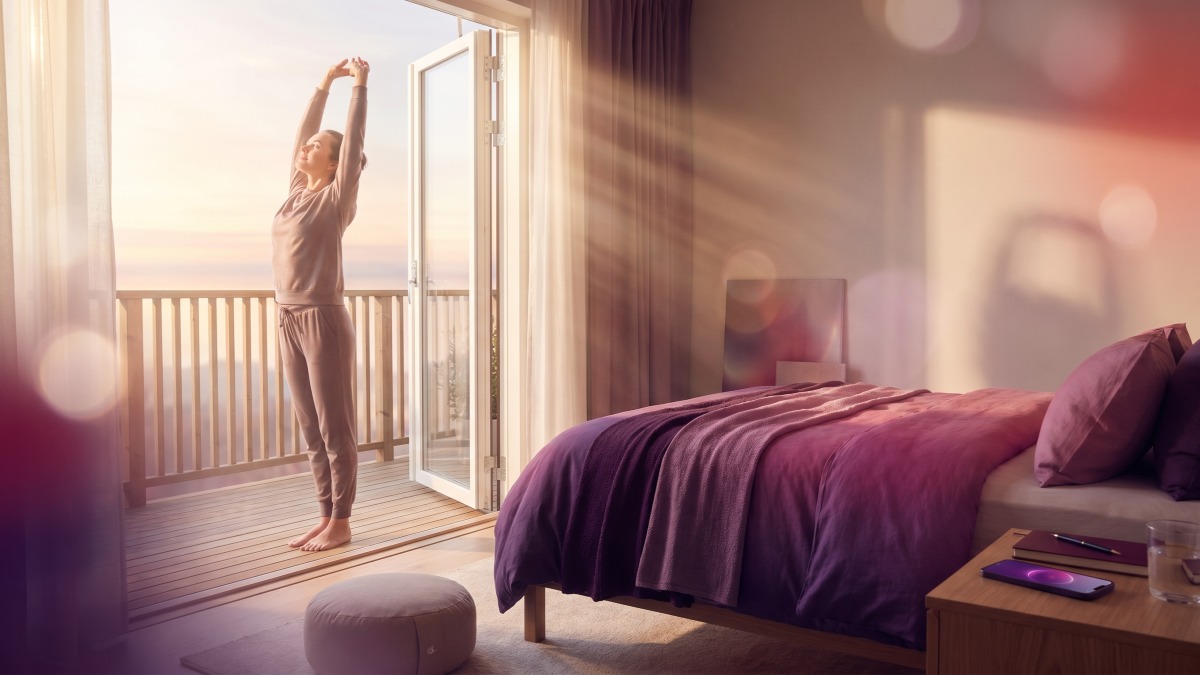
Morning Light Exposure for Better Sleep: Reset Your Body Clock Naturally
Better sleep may start before your first cup of coffee. In fact, one of the most powerful sleep tools available to you is free, simple, and already rising outside your window: morning light. If you struggle to fall asleep at night, wake up groggy, feel low energy during the day, or rely on caffeine
Better sleep may start before your first cup of coffee. In fact, one of the most powerful sleep tools available to you is free, simple, and already rising outside your window: morning light. If you struggle to fall asleep at night, wake up groggy, feel low energy during the day, or rely on caffeine to “force” alertness, your body clock may not be getting the signal it needs at the right time.
As the light therapy principle says: “Light is the most powerful signal for your body clock.” Your brain uses light, especially bright outdoor light in the morning, to decide when to feel awake, when to release hormones, when to regulate body temperature, and when to prepare for sleep later that night. This is why morning light exposure is not just a wellness trend; it is one of the most evidence-aligned daily habits for improving sleep timing, energy, mood, and circadian rhythm stability.
There is also a beautiful symbolic truth in this practice. As the astro insight reminds us: “Just as the sun governs the day, let it govern your wake cycle.” Your body evolved under the rhythm of sunrise and sunset. Modern life, dim indoor mornings, screens at night, late meals, irregular wake times, often disconnects us from that rhythm. Morning sunlight helps reconnect you.
In this ultimate guide, you’ll learn exactly how to use morning light exposure for better sleep, even if you live in a cloudy climate, work indoors, wake before sunrise, or feel like your sleep schedule is completely off track.
What You’ll Learn
- Why morning light exposure improves sleep by resetting your biological clock
- The 30-minute rule and why timing matters so much
- Why outdoor light is dramatically brighter than indoor light, even on cloudy days
- How morning light determines evening sleepiness and melatonin timing
- How to build a 10-15 minute morning light walk into your daily routine
- How to track your light exposure, energy, and sleep patterns in a journal
- Advanced strategies for winter, shift work, insomnia, jet lag, and low mood
If you want a guided personal development routine that combines journaling, meditation, breathwork, and daily transformation habits, you can explore Astrara, a mobile app designed around intentional 21-day change. For more wellness and self-growth resources, you can also visit the Astrara blog.
Morning Light Exposure: The Simple Sleep Habit Most People Overlook
Morning light exposure is one of the most underrated sleep interventions because it looks too simple to be powerful. Walk outside, face natural daylight, and let your body receive a clear “day has begun” signal. Yet beneath that simplicity is a sophisticated biological system that affects nearly every part of your sleep-wake cycle.
What Morning Light Exposure Actually Means
Morning light exposure means getting bright natural light into your eyes soon after waking, ideally outdoors and without looking directly at the sun. You do not need to sunbathe. You do not need to stare at the sky. You simply need to be outside in daylight long enough for specialized light-sensitive cells in your eyes to detect the brightness and send timing information to your brain.
The most practical version is this: go outside for 10-15 minutes within 30 minutes of waking. Walk, stand on a balcony, sit near open sky, or take your dog out. The key is direct outdoor daylight, not filtered through a window. Glass blocks and reduces portions of the light spectrum and intensity that your circadian system uses most effectively.
Why It Matters for Sleep
Your sleep is not controlled only at night. It is shaped all day long. Morning light tells your brain, “This is the start of the active phase.” That signal helps set a countdown for melatonin, the hormone that rises in the evening and prepares your body for sleep. When morning light is consistent, your body becomes better at predicting when to feel alert and when to feel sleepy.
Without strong morning light, your body clock can drift later. You may feel tired in the morning, more awake at night, and frustrated when your bedtime arrives but your brain refuses to shut down. This is especially common among people who work indoors, wake in dim rooms, use screens late, or have inconsistent schedules.
A Real-World Example
Imagine two people waking at 7:00 a.m. One checks their phone in bed, gets ready under indoor lighting, commutes in a car, and starts work under office lights. The other steps outside for a 12-minute walk at 7:15 a.m. before checking emails. By evening, the second person is more likely to have a stronger circadian anchor: better morning alertness, more stable daytime energy, and a clearer sleepiness signal at night.
Actionable Tips
- Get outside within 30 minutes of waking whenever possible.
- Aim for 10-15 minutes on bright days and longer on dark, cloudy days.
- Do not look directly at the sun; simply expose your eyes to ambient daylight.
- Pair light exposure with an existing habit, such as walking, coffee, prayer, or journaling.
- Track the time of exposure and your energy level to notice patterns.
Once you understand that sleep begins in the morning, the next question becomes: how exactly does your body clock respond to light?
The Science: How Morning Sunlight Resets Your Biological Clock
Your body runs on an internal timing system called the circadian rhythm. This roughly 24-hour cycle influences sleep, alertness, hormones, digestion, mood, metabolism, immune function, and body temperature. At the center of this system is a tiny region in the brain called the suprachiasmatic nucleus, often abbreviated as the SCN. Think of it as your master clock.
The Role of the SCN
The SCN sits in the hypothalamus and receives information from the eyes about light and darkness. Unlike normal vision, which helps you see shapes, colors, and movement, your circadian light system is focused on timing. Specialized retinal cells called intrinsically photosensitive retinal ganglion cells detect brightness, especially blue-enriched daylight, and communicate directly with the SCN.
When morning light reaches these cells, the SCN interprets it as a wake-up signal. It then coordinates downstream processes: cortisol rises in a healthy morning rhythm, melatonin stays suppressed, body temperature begins to increase, and alertness improves. Later, when light decreases and darkness arrives, the SCN allows melatonin to rise again.
Morning Light and Melatonin Timing
Melatonin is often called the sleep hormone, but it is more accurately a darkness hormone. It does not knock you out like a sleeping pill. Instead, it signals that biological night has begun. Morning light helps determine when melatonin will begin rising in the evening. If your morning light exposure happens late, or if you spend the first half of your day in dim indoor environments, your melatonin rhythm may shift later, making it harder to fall asleep at your desired bedtime.
“Light is the most powerful signal for your body clock.”
This quote captures the core lesson: your circadian rhythm listens to light more than motivation, willpower, or bedtime intentions. You may decide you want to sleep at 10:30 p.m., but if your body clock thinks the day started late, your biology may disagree.
Statistics and Light Intensity
Light is measured in lux. Typical indoor lighting often ranges from about 100 to 500 lux. A bright office may reach 500 to 1,000 lux. Outdoor daylight, however, is far stronger. A cloudy day may provide 5,000 to 20,000 lux, while direct sunlight can exceed 50,000 to 100,000 lux. This is why outdoor light can easily be 10 times brighter than indoor light, and often much more.
Case Study: The Indoor Worker
Consider an office worker who wakes at 6:30 a.m., drives to work before sunrise in winter, spends eight hours indoors, exercises at night under bright gym lights, and scrolls on a phone before bed. Their brain receives weak morning light and strong evening stimulation. Over time, they may feel sleepy at the wrong times. Adding a morning outdoor walk plus dimmer evening lighting can help rebuild a stronger rhythm.
Actionable Tips
- Use morning light as a biological “start button.”
- Prioritize outdoor light over indoor light whenever possible.
- Keep your wake time consistent to strengthen the circadian signal.
- Reduce bright artificial light in the final hour before bed.
Now that the science is clear, let’s explore one of the most practical rules for using it: the 30-minute morning light rule.
The 30-Minute Rule for Better Sleep with Morning Light Exposure
The 30-minute rule is simple: get outside for bright natural light within 30 minutes of waking. This does not mean your sleep is ruined if you miss the window. But the closer light exposure happens to wake time, the stronger and clearer the signal tends to be. Your body is especially responsive to light during the early part of your biological day.
Why Timing Is So Important
Your circadian rhythm is not just affected by how much light you get; it is affected by when you get it. Morning light generally advances your body clock, helping you feel sleepy earlier in the evening and awake earlier the next day. Late-night bright light tends to delay the body clock, making you feel alert later and pushing sleep timing later.
This is why two people can receive the same amount of light but experience different sleep effects depending on timing. Bright light at 8:00 a.m. can help stabilize your rhythm. Bright light at 11:30 p.m. can interfere with melatonin and delay sleep.
The Ideal Morning Light Routine
A strong morning light routine does not need to be complicated. Here is a practical model:
- Wake up at a consistent time. Consistency gives your body clock a stable anchor.
- Open curtains immediately. Let your environment signal daytime.
- Go outside within 30 minutes. Aim for 10-15 minutes of daylight.
- Move gently. Walking improves circulation and alertness.
- Track your response. Note energy, mood, and sleepiness later that evening.
Real-World Example: The Parent with a Busy Morning
A parent may not have time for a peaceful sunrise walk. But morning light exposure can still happen during real life. They can take children to school on foot, step outside while the kettle boils, sit near the doorway with breakfast, or walk around the block after school drop-off. The practice works best when it is flexible enough to survive imperfect mornings.
What If You Wake Before Sunrise?
If you wake before sunrise, use gentle indoor lighting at first, then get outside as soon as natural light appears. If sunrise is much later, a bright light therapy lamp may help, especially in winter, but it should be used carefully and ideally with guidance if you have eye conditions, bipolar disorder, or other medical concerns.
Actionable Tips
- Set a phone reminder called “Get light” for your wake time.
- Place shoes, jacket, or keys near the door the night before.
- Drink your morning beverage outside instead of at your desk.
- Use habit stacking: “After I brush my teeth, I go outside.”
- Track whether earlier light leads to earlier evening sleepiness.
The 30-minute rule works because your brain needs a strong light signal. To understand why outdoor light is so effective, we need to compare it with indoor light.
Why Outdoor Morning Light Is 10x Brighter Than Indoor Light
Many people assume that a bright kitchen, office, or bathroom mirror light is enough to wake the body clock. Unfortunately, most indoor environments are dim compared with outdoor daylight. They may look bright to your conscious eyes, but your circadian system responds to a much stronger scale of brightness.
Indoor Light vs. Outdoor Light
A typical home may provide 100 to 300 lux. A well-lit office may provide 300 to 1,000 lux. Outdoor shade on a cloudy morning may still provide several thousand lux. Bright outdoor sunlight can provide tens of thousands of lux. This means that a short walk outside can deliver a circadian signal that indoor lighting struggles to match.
This difference explains why people can spend all morning “awake” indoors and still feel biologically under-signaled. Their eyes are open, their calendar is full, but their master clock has not received a strong enough daytime cue.
Why Windows Are Not the Same
Sitting by a sunny window is better than sitting in a dark room, but it is not equivalent to going outside. Windows reduce light intensity and may filter parts of the spectrum. Your angle to the sky also matters. A window facing a wall, narrow street, or shaded area may provide much less circadian stimulation than being outdoors under open sky.
If going outside is impossible, sitting near a bright window is a reasonable backup. But when possible, outdoor light is the gold standard.
Real-World Example: The Remote Worker
A remote worker wakes at 7:30 a.m., opens a laptop at 7:45 a.m., and works until noon. They may not leave the house until lunch. Even if they feel productive, their body clock may receive its first strong light cue too late. By adding a 10-minute outdoor walk before opening the laptop, they give their brain a clearer start signal and may notice better focus by mid-morning and more natural sleepiness at night.
How Much Outdoor Light Do You Need?
For many people, 10-15 minutes of outdoor light soon after waking is a useful target. On very bright days, even shorter exposure may help. On cloudy days, during winter, or if you are wearing a hat and sunglasses, you may need longer, often 20-30 minutes. You do not need to burn your skin or stare at direct sunlight. The goal is light reaching your eyes safely.
Actionable Tips
- Choose outdoor spaces with open sky exposure when possible.
- Avoid wearing dark sunglasses during your short morning light session unless medically necessary.
- If it is cloudy, extend your outdoor time rather than skipping it.
- Use indoor bright light only as a backup, not your primary strategy.
- Keep mornings bright and evenings dim to create contrast.
Once you begin respecting the strength of outdoor light, the next question becomes how it translates into better sleep at night.
How Morning Light Exposure Determines Evening Sleepiness
One of the most important lessons in sleep health is this: your ability to fall asleep tonight is influenced by what happens this morning. Morning light exposure sets off a chain reaction that affects alertness during the day and sleepiness in the evening. When the timing is consistent, your body becomes better at anticipating bedtime.
The Circadian Countdown
After morning light hits your eyes, your brain receives a strong time stamp. This helps regulate the rhythm of cortisol, melatonin, body temperature, and alertness. In a healthy rhythm, cortisol rises after waking, alertness increases through the morning, energy stabilizes during the day, and melatonin begins rising in the evening as light decreases.
If morning light exposure is delayed, your internal clock may interpret the day as starting later. That can push the melatonin rise later too. The result: you get into bed at 10:30 p.m., but your body behaves as if it is not yet biological night.
Sleep Pressure vs. Circadian Timing
Two major forces influence sleep: sleep pressure and circadian timing. Sleep pressure builds the longer you are awake. Circadian timing determines when your body is biologically prepared for sleep. You can feel physically tired but still be unable to sleep if your circadian clock is delayed. Morning light helps align these forces so tiredness and biological night arrive together.
Case Study: The Night Owl Reset
A person who naturally stays up until 1:00 a.m. wants to fall asleep at 11:00 p.m. Instead of only forcing an earlier bedtime, they begin waking at a consistent time and getting outdoor light by 7:30 a.m. They also dim lights after 9:30 p.m. Over two to three weeks, their evening sleepiness begins arriving earlier. The shift is gradual, but it feels more natural than simply lying in bed awake.
Why Consistency Beats Intensity
One heroic sunrise walk will not permanently fix an irregular sleep schedule. Your body clock learns from repeated signals. A modest 10-minute outdoor walk every morning is more powerful than one long walk once a week. Consistency creates predictability, and predictability is exactly what your circadian system needs.
Actionable Tips
- Use morning light daily for at least 7-14 days before judging results.
- Combine morning brightness with evening dimness for best results.
- Keep bedtime and wake time within a consistent range.
- Avoid late caffeine, which can mask natural sleepiness signals.
- Journal your evening sleepiness on a 1-10 scale.
Morning light is powerful on its own, but it becomes even more effective when paired with movement, which is why the morning light walk is such a practical habit.
The Morning Light Walk: A 15-Minute Action Plan for Better Sleep
The morning light walk is the simplest way to combine three sleep-supportive signals: daylight, movement, and routine. It does not require a gym membership, special equipment, or a perfect schedule. It simply asks you to step outside and let your body understand that the day has begun.
The Basic Protocol
The recommended action is straightforward: walk outdoors for 10-15 minutes within 30 minutes of waking. If you cannot walk, you can sit or stand outside. If you have limited mobility, sitting near open daylight outdoors still helps. The purpose is not intense exercise; the purpose is light exposure.
- Wake up. Avoid lingering in bed with your phone.
- Hydrate. Drink water to support alertness.
- Go outside. Do this within 30 minutes when possible.
- Walk gently for 10-15 minutes. Keep your eyes open and relaxed.
- Return and begin your day. Notice energy and mood changes.
Why Walking Helps
Walking adds a mild activation signal to your nervous system. It increases blood flow, raises body temperature, and can reduce morning grogginess. It also gives your mind a transition between sleep and work. Instead of launching directly into notifications, you create a calm threshold into the day.
For people using personal development practices, the walk can become a moving meditation. You can pair it with breathwork, gratitude, intention-setting, or a simple affirmation. Astrara’s 21-day transformation approach fits naturally here because small repeated rituals create identity-level change. You can learn more about Astrara’s personal development ecosystem on Astrara.com.
Real-World Examples
- The student: Walks around the block before studying and notices better morning focus.
- The remote worker: Takes a 12-minute walk before opening Slack or email.
- The busy parent: Walks children to school and treats it as circadian medicine.
- The apartment dweller: Stands outside the building entrance with tea for 10 minutes.
- The traveler: Uses morning light at the destination to reduce jet lag.
How to Make It Stick
The secret is reducing friction. Decide your walking route in advance. Keep shoes visible. Prepare weather-appropriate clothing. If you wait to “feel motivated,” the habit will be inconsistent. If the environment makes the action obvious, it becomes easier.
Actionable Tips
- Choose a route that feels safe, easy, and repeatable.
- Listen to calming audio, silence, or a short meditation.
- Use the walk to set one intention for the day.
- Do not turn it into a performance goal; consistency matters more than distance.
- On difficult mornings, do a “minimum version”: stand outside for three minutes.
To understand whether this habit is working for you, you need feedback. That is where tracking comes in.
Track Light Exposure: The 3-Minute Journal Method
Tracking your morning light exposure turns a vague wellness habit into a measurable personal experiment. You do not need complicated spreadsheets or wearable devices. A simple 3-minute journal entry can reveal how light timing affects your energy, mood, and sleep.
What to Track
The core task is simple: record the time of your morning light exposure and your energy level. Over time, you can add bedtime, wake time, sleep quality, caffeine intake, and evening screen use. But start small. The goal is to create awareness, not another burden.
Basic Morning Light Journal Template
- Wake time: What time did you get out of bed?
- Light exposure time: When did you go outside?
- Duration: How many minutes?
- Weather: Sunny, cloudy, rainy, dark, snowy?
- Morning energy: Rate 1-10.
- Evening sleepiness: Rate 1-10.
- Sleep quality next morning: Rate 1-10.
Why Journaling Works
Journaling helps you see patterns that memory misses. For example, you may discover that morning light before 8:00 a.m. leads to better energy than light at 10:30 a.m. You may notice that cloudy-day walks still help. You may see that late caffeine or bright evening screens weaken the benefits of morning light.
This kind of self-observation is central to personal development. Instead of following generic advice blindly, you become a student of your own nervous system. Astrara’s journaling, meditation, and breathwork tools are designed to support exactly this kind of daily reflection. If you prefer French, Spanish, German, Italian, or Portuguese, you can explore Astrara in multiple languages, including Astrara French, Astrara Spanish, Astrara German, Astrara Italian, and Astrara Portuguese.
Real-World Example: The Energy Pattern
A woman tracks her light exposure for 14 days. On days she gets outside before 7:45 a.m., her morning energy averages 7/10 and she feels sleepy by 10:15 p.m. On days she delays light until after 10:00 a.m., her energy averages 5/10 and she scrolls in bed until midnight. The journal does not shame her; it gives her useful information.
Actionable Tips
- Keep tracking to three minutes or less.
- Use numbers so patterns are easier to compare.
- Track for at least 14 days before making conclusions.
- Note unusual factors such as alcohol, stress, travel, or illness.
- Celebrate consistency, not perfection.
Tracking reveals your patterns. But to maximize results, you also need to understand how morning light interacts with evening habits.
Morning Light Exposure Works Best When Evenings Are Dim
Morning light exposure is powerful, but it is only one half of the circadian equation. Your body clock needs contrast: bright days and dark nights. If you get excellent morning sunlight but flood your eyes with bright screens and overhead lighting until midnight, you send mixed signals to your brain.
The Bright Day, Dark Night Principle
For most of human history, mornings and afternoons were bright, while evenings were dim and warm. Modern life often reverses this pattern. Many people spend the brightest part of the day indoors, then spend the night under artificial lighting with phones inches from their face. The result is circadian confusion.
The ideal pattern is simple: increase light exposure early in the day and reduce light exposure late in the evening. This creates a strong biological distinction between daytime and nighttime.
Evening Light and Melatonin
Bright light at night can suppress or delay melatonin. Blue-enriched light from screens is not the only issue; bright overhead lighting can also matter. The closer light exposure occurs to bedtime, the more likely it is to interfere with your natural sleep preparation. This does not mean you must live by candlelight, but it does mean your evening environment should gradually soften.
Real-World Example: The Screen-Heavy Evening
A person gets morning light daily but still struggles to fall asleep. Their journal reveals that they work on a laptop until 10:30 p.m., watch bright television, then scroll in bed. Once they create a 60-minute dim-light wind-down, warm lamps, reduced brightness, no phone in bed, the morning light routine begins producing stronger results.
Evening Routine Ideas
- Dim overhead lights 60-90 minutes before bed.
- Use warm lamps instead of bright ceiling lights.
- Lower screen brightness and use night mode.
- Keep phones out of bed when possible.
- Try meditation, breathwork, reading, stretching, or journaling.
Astrara’s meditation and breathwork features can help create a calmer transition into sleep. Pairing morning light with an evening nervous-system downshift is often more effective than focusing on either habit alone.
Actionable Tips
- Create a “digital sunset” 30-60 minutes before bed.
- Charge your phone outside the bedroom if possible.
- Use warm, low lighting in the evening.
- Keep your bedroom dark, cool, and quiet.
- Make your last hour predictable so your brain learns the pattern.
Once your mornings and evenings are aligned, the next step is adapting the habit to real-life obstacles like winter, cloudy weather, and busy schedules.
Better Sleep with Morning Light Exposure in Winter, Cloudy Weather, and Dark Mornings
Morning light exposure is easy to romanticize when the sun rises early and the weather is pleasant. But many people need sleep support most during winter, rainy seasons, or dark mornings. The good news is that daylight still helps, even when the sky is cloudy.
Cloudy Days Still Count
A cloudy outdoor morning is usually far brighter than indoor lighting. While direct sunlight can be extremely intense, overcast daylight may still provide thousands of lux. Your brain does not require perfect sunshine to receive a useful circadian signal. The key is to go outside anyway and extend the duration if needed.
Winter Adjustments
In winter, sunrise may occur after your wake time. If you wake in darkness, use gentle indoor light first, then get outdoor light as soon as possible after sunrise. If your schedule prevents this, consider stepping outside during your commute, morning break, or lunch. The earlier the better, but some daylight is better than none.
When to Consider a Light Therapy Lamp
A bright light therapy lamp can be useful when outdoor morning light is unavailable, especially for seasonal mood changes or very dark climates. Many light boxes are designed to deliver around 10,000 lux at a specified distance. However, they should be used correctly. Too late in the day, they may delay sleep. Too intense or too long, they may cause headaches, eye strain, or agitation in sensitive individuals.
If you have bipolar disorder, retinal disease, migraines triggered by light, or take photosensitizing medications, speak with a healthcare professional before using a light therapy device.
Real-World Example: The Northern Climate Routine
A person living in a northern city wakes at 6:30 a.m. in winter, before sunrise. They turn on warm indoor lights, avoid scrolling in bed, and use a light box for 20 minutes at breakfast. At 8:15 a.m., when daylight appears, they walk outside for 10 minutes. In the evening, they dim lights after 9:00 p.m. This layered approach helps preserve rhythm during a difficult season.
Actionable Tips
- Do not skip outdoor light just because it is cloudy.
- Extend exposure to 20-30 minutes in dim weather.
- Use weather gear to reduce excuses: coat, umbrella, boots, hat.
- If needed, explore light therapy lamps with professional guidance.
- Keep your wake time consistent during winter weekends.
Weather is one obstacle. Chronotype, your natural tendency toward earlier or later sleep, is another. Let’s look at how morning light affects different sleep types.
Morning Light Exposure for Night Owls, Early Birds, and Irregular Sleep Schedules
Not everyone has the same natural sleep rhythm. Some people wake easily at sunrise, while others feel most alive at night. These tendencies are called chronotypes. Morning light exposure can help stabilize all chronotypes, but it is especially useful for people whose sleep timing has drifted later than they want.
Night Owls
Night owls often struggle with conventional schedules. They may feel foggy in the morning and alert late at night. Morning light can help shift the body clock earlier, but it must be paired with a consistent wake time and reduced evening light. The mistake many night owls make is trying to force an earlier bedtime while still sleeping late on weekends. This creates social jet lag, where the body clock repeatedly shifts back and forth.
Early Birds
Early birds may not need to shift earlier, but morning light can still strengthen alertness and mood. If an early bird wakes too early and wants to sleep later, very early bright light may not be ideal. In that case, they may benefit from keeping early mornings dim and getting more light slightly later. Individual patterns matter.
Irregular Sleep Schedules
People with inconsistent schedules often have the most to gain from morning light. A stable wake time plus outdoor light acts like a daily anchor. Even when bedtime varies, a consistent morning signal helps prevent the rhythm from drifting too far.
Shift Workers
Shift work is more complex because the body may need to sleep during daylight and stay awake at night. Morning sunlight after a night shift can make it harder to sleep. Shift workers may need strategic light avoidance after work, sunglasses during the commute home, blackout curtains, and bright light during the work shift. This is an area where individualized guidance is valuable.
Real-World Example: The Weekend Drift
A young professional wakes at 6:45 a.m. on weekdays but sleeps until 10:30 a.m. on weekends. Sunday night insomnia becomes routine. By keeping weekend wake time within one hour of weekdays and getting morning outdoor light both days, they reduce the Monday “jet lag” feeling.
Actionable Tips
- Night owls: prioritize consistent wake time and early outdoor light.
- Early birds: observe whether very early light makes you wake too early.
- Irregular sleepers: use morning light as your non-negotiable anchor.
- Shift workers: be strategic; morning light may not always be helpful after night shifts.
- Track patterns before making major changes.
Light is a powerful tool, but it works best as part of a full lifestyle system that supports sleep from morning to night.
Building a Full Sleep Routine Around Morning Light Exposure
Morning light exposure is a cornerstone habit, but better sleep usually comes from a system of supportive behaviors. Think of morning light as the anchor, then add habits that reinforce the same message: daytime is for energy, nighttime is for recovery.
Start with a Consistent Wake Time
Your wake time is often more important than your bedtime when resetting sleep. A consistent wake time gives morning light a predictable target. If you wake at 6:30 a.m. one day and 10:00 a.m. the next, your light exposure timing changes dramatically. This can confuse your body clock.
Use Caffeine Strategically
Caffeine can be useful, but timing matters. Many people benefit from delaying caffeine for 60-90 minutes after waking, allowing natural cortisol and alertness rhythms to rise first. Avoid caffeine late in the day, especially after early afternoon, because it can reduce sleep pressure at bedtime.
Move During the Day
Physical activity supports sleep quality and mood. Morning walks are a gentle start, but additional movement during the day can help build healthy sleep pressure. Outdoor exercise is especially useful because it combines movement with light exposure.
Eat on a Rhythm
Meal timing also affects circadian rhythms. Eating breakfast after morning light may reinforce daytime signals, while heavy late-night meals can disrupt sleep for some people. You do not need extreme rules, but regular meals can support regular sleep.
Create an Evening Downshift
Your nervous system needs time to transition. Meditation, journaling, breathwork, gentle stretching, and gratitude practices can reduce cognitive and emotional arousal. Astrara’s personal development app combines these tools in a 21-day transformation format, making it easier to turn scattered intentions into a structured daily practice.
Real-World Example: The Complete Day
A person wakes at 7:00 a.m., gets outside by 7:20 a.m., delays coffee until 8:15 a.m., works near a bright window, takes a short lunch walk, stops caffeine after 2:00 p.m., dims lights at 9:30 p.m., journals for three minutes, and sleeps at 10:45 p.m. No single habit is dramatic, but the combined rhythm is powerful.
Actionable Tips
- Protect your wake time first.
- Get outdoor light before digital overload.
- Use caffeine as a tool, not a crutch.
- Move your body daily, ideally outdoors.
- End the day with a repeatable calming ritual.
As your sleep routine improves, you may notice benefits beyond sleep itself, especially in mood, focus, and emotional resilience.
The Mood, Energy, and Mental Clarity Benefits of Morning Light
Morning light exposure is often discussed as a sleep tool, but its benefits can extend into daytime mood, energy, and cognitive performance. When your circadian rhythm is stronger, your entire day can feel more organized from the inside out.
Morning Light and Mood
Bright light has long been studied for its effects on seasonal mood patterns. While morning sunlight is not a replacement for mental health care, many people notice that consistent daylight exposure supports emotional steadiness. Light influences circadian timing, alertness systems, and neurotransmitter-related pathways that may affect mood.
Energy Without Overstimulation
Many people try to solve low energy with caffeine, urgency, or stress. Morning light offers a different kind of energy: biological alignment. Instead of forcing alertness, it helps your body understand that it is time to be awake. This may reduce reliance on repeated caffeine hits or late-day stimulation.
Mental Clarity and Focus
A stable circadian rhythm supports cognitive performance. If your body is still half in “biological night” during your first work hours, focus can suffer. Morning light, especially combined with movement, can make the transition into concentration smoother.
Real-World Example: The Creative Professional
A designer starts each day by checking messages in bed, then feels scattered until late morning. She replaces the first 15 minutes of scrolling with an outdoor light walk and a short intention journal. Within two weeks, she reports less mental clutter and a clearer start to creative work. The light did not do everything; it created the conditions for a better morning state.
Pairing Light with Personal Development
Morning light is an ideal moment for inner work because your mind is transitioning from sleep into identity. You can ask:
- What kind of energy do I want to bring into today?
- What is one action that supports the person I am becoming?
- What can I release before the day begins?
- How does my body feel after receiving natural light?
For guided reflections, transformation practices, and supportive routines, visit the Astrara blog or explore the app experience through Astrara’s homepage.
Actionable Tips
- Use your morning walk as a no-phone clarity window.
- Combine light exposure with three slow breaths.
- Set one intention before checking notifications.
- Notice whether mood improves after 7-14 days of consistency.
- Seek professional support if low mood or insomnia is persistent.
Now that you understand the broad benefits, let’s move into advanced strategies and mistakes to avoid.
Expert Tips and Pro Strategies for Morning Light Exposure
Once you have the basics, outdoor light within 30 minutes, 10-15 minutes, daily consistency, you can refine the practice. Advanced strategies help you adapt morning light exposure to your chronotype, environment, travel schedule, and sleep goals.
Pro Strategy 1: Create Strong Light Contrast
The circadian system loves contrast. Make your mornings bright and your evenings dim. Many people only focus on adding morning light but ignore late-night brightness. The more contrast you create, the clearer the message: day is day, night is night.
Pro Strategy 2: Stack Light with Movement and Temperature
Morning movement and a slightly cooler-to-warmer body transition can reinforce wakefulness. A brisk walk outdoors gives your brain light, your muscles activity, and your body temperature a natural rise. This combination is often more effective than sitting indoors with coffee.
Pro Strategy 3: Use Light to Manage Jet Lag
When traveling across time zones, light timing becomes crucial. Morning light at your destination can help advance your rhythm if you are adapting to an earlier schedule. Evening light may help delay your rhythm when needed. Jet lag strategy depends on direction and number of time zones, so plan carefully.
Pro Strategy 4: Respect Individual Sensitivity
Some people are highly sensitive to light. They may shift quickly with small changes, while others need stronger or longer exposure. Track your response rather than assuming a universal dose. If you experience headaches, agitation, eye discomfort, or sleep worsening, adjust and seek guidance if necessary.
Common Mistakes to Avoid
- Getting light too late: Waiting until midday may reduce the phase-shifting benefit.
- Relying on indoor light: Most indoor lighting is too dim for a strong circadian signal.
- Wearing dark sunglasses every morning: This can reduce useful light exposure unless needed for safety or medical reasons.
- Ignoring evening light: Bright nights can undo bright mornings.
- Expecting instant results: Circadian rhythms often improve over days or weeks.
Recommended Tools and Resources
- Journal or app: Track light timing, energy, and sleep quality.
- Weather app: Plan outdoor exposure around daylight and conditions.
- Light meter app: Not perfect, but useful for comparing indoor and outdoor brightness.
- Light therapy lamp: Helpful in dark seasons when used correctly.
- Meditation and breathwork tools: Support evening wind-down and stress regulation.
If you have questions about Astrara, app support, or wellness resources, you can use the Astrara contact page. You can also review Astrara’s Privacy Policy and Terms & Conditions for information about data and use.
Step-by-Step Morning Light Checklist
Use this checklist for the next 21 days. It is simple enough to follow, but powerful enough to change your sleep rhythm when practiced consistently.
- Choose a consistent wake time.
Pro tip: Keep weekends within one hour of your weekday wake time when possible. - Prepare the night before.
Pro tip: Place shoes, jacket, and journal where you can see them. - Avoid phone-first mornings.
Pro tip: Get light before notifications whenever possible. - Go outside within 30 minutes of waking.
Pro tip: If you miss the window, go as soon as you can. - Walk or sit outdoors for 10-15 minutes.
Pro tip: Extend to 20-30 minutes on cloudy or winter mornings. - Keep your eyes relaxed and exposed to ambient light.
Pro tip: Do not stare at the sun; open-sky daylight is enough. - Track your exposure.
Pro tip: Record time, duration, weather, and energy level in three minutes. - Build bright-day habits.
Pro tip: Take a lunch walk or work near natural light when possible. - Dim your evening environment.
Pro tip: Lower lights 60 minutes before bed and reduce screen intensity. - Review your pattern weekly.
Pro tip: Look for links between early light, evening sleepiness, and sleep quality.
This 21-day approach mirrors the principle behind transformation: small daily actions become identity-level change. Morning light is not just a sleep hack. It is a daily vote for rhythm, clarity, and self-trust.
Conclusion: Let the Sun Govern Your Wake Cycle
Morning light exposure is one of the simplest and most powerful habits for better sleep. It works because it speaks the language your body clock understands: light. By stepping outside soon after waking, you give your brain a clear signal that the day has begun, helping your body prepare for sleep later that night.
Key Takeaways
- Morning light resets your biological clock through the brain’s circadian timing system.
- The 30-minute rule matters: get outdoor light soon after waking whenever possible.
- Outdoor light is far brighter than indoor light, even on cloudy days.
- Morning light influences evening sleepiness by shaping melatonin timing.
- Tracking helps you personalize the habit and see what works for your body.
- Bright mornings and dim evenings create the strongest rhythm.
As the astro insight says, “Just as the sun governs the day, let it govern your wake cycle.” Start tomorrow morning. Step outside for 10-15 minutes. Track your energy. Repeat for 21 days. Your sleep may not transform overnight, but your body will begin receiving the signal it has been waiting for.
If you want support building consistent rituals around sleep, journaling, meditation, breathwork, and personal growth, explore Astrara and continue learning through the Astrara blog. Share this guide with someone who needs better sleep, and begin your next morning with light.
Frequently Asked Questions
How soon after waking should I get morning light exposure?
Ideally, get outdoor morning light within 30 minutes of waking. This timing gives your body clock a clear signal that the day has started. If you cannot get outside within that window, go as soon as possible. Earlier is generally better for shifting your rhythm earlier and supporting nighttime sleepiness, but consistency matters more than perfection. Even a short outdoor break later in the morning is better than spending the entire first half of the day indoors under dim artificial lighting.
How long should I stay outside for morning light?
A practical target is 10-15 minutes outdoors soon after waking. On bright sunny days, this may be enough for many people. On cloudy, rainy, winter, or very dark mornings, consider extending exposure to 20-30 minutes. You do not need to stare at the sun or sunbathe. The goal is simply to let natural daylight reach your eyes safely while you walk, sit, or stand outside. Track your energy and sleep quality to find your personal ideal duration.
Can morning light really help me sleep better at night?
Yes, morning light can support better sleep by helping regulate your circadian rhythm. Light exposure early in the day signals wakefulness to your brain and helps set the timing for melatonin release later in the evening. Many people struggle to fall asleep because their body clock is delayed, not because they lack discipline. Morning light, especially when paired with dim evenings and a consistent wake time, can help your body feel sleepy at a more appropriate hour.
Is indoor light enough to reset my body clock?
Indoor light is usually much weaker than outdoor daylight. A typical indoor room may provide only 100-500 lux, while outdoor daylight can provide thousands to tens of thousands of lux, even when cloudy. Sitting near a bright window is better than staying in a dark room, but going outside is usually more effective because windows reduce light intensity and filter some wavelengths. If outdoor light is impossible, bright indoor light or a light therapy lamp may help as a backup.
Do I need direct sunlight, or is cloudy daylight enough?
You do not need direct sunlight. Cloudy daylight still counts and is often much brighter than indoor lighting. The key is being outdoors under natural sky exposure. On overcast days, you may need a longer session, perhaps 20-30 minutes instead of 10-15. Avoid thinking, “There is no sun, so it does not matter.” Your circadian system can still receive a useful signal from natural daylight, even when the weather feels gray or gloomy.
Should I wear sunglasses during morning light exposure?
If medically necessary or required for safety, wear sunglasses. However, dark sunglasses reduce the amount of light reaching your eyes, which may weaken the circadian signal. For a short morning light session, many people benefit from going without sunglasses while avoiding direct sun-gazing. Never stare directly at the sun. If you have eye conditions, light sensitivity, migraines, or medical advice to wear sunglasses, follow professional guidance and consider other safe ways to support your rhythm.
What if I wake up before sunrise?
If you wake before sunrise, use gentle indoor lighting to begin your day, then get outside as soon as daylight appears. In winter or northern climates, you may also consider a properly used light therapy lamp in the morning. Avoid blasting yourself with bright light in the middle of the night if you intend to go back to sleep. If dark mornings are a regular challenge, combine consistent wake time, outdoor daylight later in the morning, and dim evening habits.
Can morning light exposure help with insomnia?
Morning light exposure may help some forms of insomnia, especially when sleep difficulty is related to circadian delay, irregular schedules, or low daytime light. It is not a cure-all, and chronic insomnia can involve stress, anxiety, conditioned arousal, medical issues, medications, or other factors. For best results, combine morning light with consistent wake time, reduced evening light, caffeine timing, relaxation practices, and a calm bedtime routine. If insomnia persists, consult a qualified healthcare professional or sleep specialist.
Is a morning walk better than just standing outside?
A morning walk is often better because it combines light exposure with gentle movement, which can improve alertness, mood, and circulation. However, standing or sitting outside still provides valuable light exposure. If you are tired, injured, disabled, or short on time, do the version you can do consistently. The most important factor is getting natural daylight into your eyes safely soon after waking. Movement is a bonus, not a strict requirement.
How many days does it take for morning light to improve sleep?
Some people notice better energy within a few days, while sleep timing changes may take one to three weeks of consistent practice. Your response depends on your current sleep schedule, evening light exposure, caffeine use, stress, chronotype, and overall routine. Track your morning light time, energy, evening sleepiness, and sleep quality for at least 14 days. Circadian habits work through repetition, so consistency is more important than expecting instant results after one morning.
Can morning light help with seasonal low mood?
Morning light may support mood, particularly during darker seasons when daylight exposure drops. Bright light therapy has been studied for seasonal mood patterns, and outdoor morning light can be a natural way to increase daily brightness. However, low mood, depression, or seasonal affective symptoms deserve proper care. Morning light can be part of a supportive routine, but it should not replace professional help when symptoms are severe, persistent, or affecting daily functioning.
What is the best time of day for light therapy?
For most people trying to sleep earlier and wake more easily, morning is the best time for bright light exposure. Morning light tends to advance the body clock, while bright light late at night can delay it. However, light timing can vary for shift workers, jet lag, and certain circadian rhythm disorders. If using a light therapy lamp, follow device instructions and consider professional guidance, especially if you have bipolar disorder, eye disease, migraines, or take photosensitizing medication.
Does morning light exposure work through a window?
Light through a window is better than no light, but it is usually less effective than being outdoors. Windows reduce light intensity and may filter parts of the light spectrum. Your position, distance from the window, and sky visibility also matter. If you cannot go outside, sit close to the brightest available window for longer. But when possible, step outdoors, even for 10 minutes, because natural open-sky light provides a much stronger circadian signal.
Can I combine morning light exposure with meditation or journaling?
Yes, combining morning light with meditation or journaling can make the habit more meaningful and easier to maintain. You might take a 10-minute light walk, then write a three-minute journal entry about your energy and intention for the day. Or you can stand outside and practice slow breathing. This pairing supports both circadian rhythm and emotional regulation. Apps like Astrara can help structure these practices into a consistent personal development routine.
Is morning light exposure safe for everyone?
Morning outdoor light is safe for most people when practiced sensibly: do not stare directly at the sun, avoid sunburn, and follow medical advice for eye or skin conditions. People with retinal disease, severe light sensitivity, bipolar disorder, migraines triggered by light, or photosensitizing medications should consult a healthcare professional before using intense light therapy lamps. Natural daylight exposure is generally gentle, but individual circumstances matter. Safety and consistency should always come before intensity.
Quotes on Better Sleep with Morning Light Exposure
“Sleep is the single most effective thing we can do to reset our brain and body health each day.”, Matthew Walker, PhD, Why We Sleep“View sunlight by going outside within 30–60 minutes of waking. Do that again in the late afternoon, prior to sunset.”, Andrew Huberman, PhD, neuroscientist and host of Huberman Lab“Light is the most important external factor affecting sleep.”, Sleep Foundation, sleep health education organization“Our circadian rhythms are synchronized to the outside world primarily by light.”, Satchin Panda, PhD, circadian rhythm researcher and author of The Circadian Code“The timing, duration, and intensity of light exposure can all influence the body clock.”, Russell Foster, PhD, circadian neuroscientist and author of Life Time
Recommended Books on Sleep, Circadian Rhythm, and Morning Light
Why We Sleep by Matthew Walker, PhD
- A leading sleep scientist explains how sleep affects memory, mood, metabolism, immunity, and long-term health. This book is useful for understanding why consistent sleep timing and circadian alignment matter.
The Circadian Code by Satchin Panda, PhD
- Focuses on how the body’s internal clock regulates sleep, energy, digestion, and overall health. Panda emphasizes the importance of daily light exposure, meal timing, and consistent routines for better circadian rhythm.
Life Time: The New Science of the Body Clock, and How It Can Revolutionize Your Sleep and Health by Russell Foster, PhD
- A clear guide to circadian biology from a leading neuroscientist. It explains how light, darkness, work schedules, and daily habits influence the body clock and sleep quality.
The Sleep Solution: Why Your Sleep Is Broken and How to Fix It by W. Chris Winter, MD
- Written by a sleep physician, this practical book explains common sleep problems and offers approachable strategies for improving sleep hygiene, including routine, light exposure, and wake-time consistency.
Sleep Smarter by Shawn Stevenson
- A wellness-focused sleep guide with practical tips on improving sleep quality. It includes advice on getting natural sunlight during the day, reducing nighttime light exposure, and creating better evening habits.
The Promise of Sleep by William C. Dement, MD, PhD
- A foundational book from one of the pioneers of sleep medicine. It explains the science of sleep, sleep debt, and the importance of healthy sleep patterns for physical and mental performance.
Written by
Olivier
Related Posts
The Ideal Bedroom Temperature for Sleep (It's 65°F / 18°C Here's Why)
The Ideal Bedroom Temperature for Sleep: The Best Bedroom Temperature for Sleep Is 65°F / 18°C — Here’s Why The best bedroom temperature for sleep is about 65°F / 18°C, with an ideal range of 64–67°F / 18–19°C for most adults. That number is not random. Your body is biologically designed to cool do

What Time Should You Stop Drinking Coffee for Better Sleep?
What Time Should You Stop Drinking Coffee for Better Sleep? When to stop drinking coffee for better sleep? For most people, the best caffeine cutoff time is noon. That means no regular coffee, espresso, energy drinks, pre-workout, or strong caffeinated tea after 12:00 p.m. if your goal is deeper, m
Sleep Hygiene: 21 Habits Backed by Science to Transform Your Sleep
Sleep Hygiene: 21 Habits Backed by Science to Transform Your Sleep Sleep hygiene is not about forcing yourself to fall asleep, lying in bed with your eyes squeezed shut, or “trying harder” to rest. It is the set of daily habits, evening rituals, and bedroom conditions that make high-quality sleep e